
Agentic AI in Support: The Future of Autonomous, Intelligent, and Scalable Service Management
Picture this: Your support team walks into Monday morning to find 847 critical tickets waiting in the queue. Sound familiar?
For most organizations across industries—whether managing IT helpdesks, customer service operations, HR requests, or facilities management—this scenario isn’t hypothetical. It’s the daily reality of support teams drowning in manual processes, compliance requirements, and escalating complexity.
But what if there was a way to flip this script entirely? Welcome to the era of Agentic AI in Support, where autonomous intelligence doesn’t just assist your team—it fundamentally transforms how support operations function across every industry.
The Support Bottleneck: Why Traditional Models Are Breaking Down
Let’s be honest about the state of enterprise support today. We’re still operating with fundamentally manual processes in a world where a single service disruption can trigger compliance violations, customer churn, or operational chaos. Whether you’re managing IT incidents, customer complaints, HR requests, or facilities issues, the challenges are strikingly similar.
The numbers tell a sobering story. According to industry benchmarks, the average enterprise spends 40-60% of their IT budget on support and maintenance operations. Yet despite this massive investment, ticket resolution times continue to climb, technical debt accumulates exponentially, and teams experience burnout faster than ever.
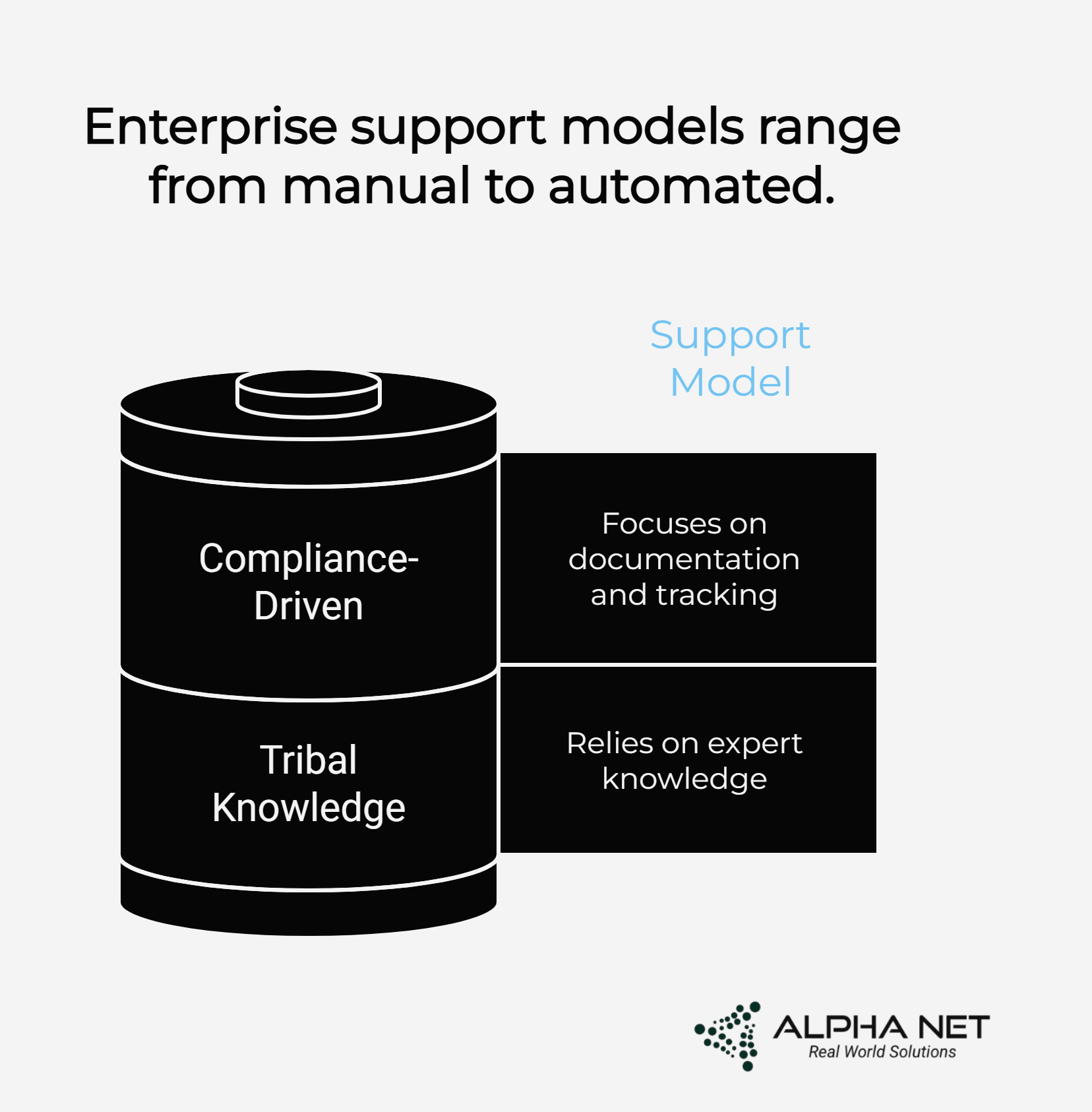
Why does this happen? Because conventional support models were designed for a simpler era. They rely heavily on tribal knowledge—that irreplaceable expertise locked in the minds of senior staff who’ve been with the company for years. When these experts leave (and they inevitably do), institutional knowledge walks out the door with them.
Moreover, modern support operates under unique constraints that make traditional automation approaches inadequate. Every change must be documented, tracked, and traced through complex approval workflows. Compliance isn’t optional—whether you’re dealing with SOX, GDPR, HIPAA, PCI DSS, or ISO 27001 requirements, regulatory frameworks create layers of complexity that generic ITSM tools simply can’t handle elegantly.
The result? Teams spend more time on paperwork than problem-solving. More energy on compliance documentation than genuine customer service. It’s a vicious cycle that leaves everyone frustrated and organizations vulnerable to service failures, security breaches, and regulatory penalties.
Enter Agentic AI: The Game-Changer Enterprise Support Has Been Waiting For
Here’s where the transformation begins. Agentic AI represents a fundamental paradigm shift from traditional automation approaches. Instead of rigid, rule-based workflows, we’re introducing intelligent agents that can reason, adapt, and learn within the specific context of your organization’s support operations.
Think of it this way: traditional automation is like a sophisticated calculator—incredibly fast at predefined operations but helpless when faced with novel scenarios. Agentic AI, on the other hand, is like having a team of specialized consultants who understand both the technical nuances and compliance requirements of your specific industry and operational context.
These aren’t chatbots with fancy interfaces or simple workflow engines. We’re talking about purpose-built AI agents that can own entire support processes from start to finish. They understand the difference between a security-critical system incident and a routine user request. They know when to escalate to human experts and when to proceed autonomously within approved parameters.
The magic happens through what we call “contextual intelligence”—the ability to understand not just what needs to be done, but why it matters in the broader ecosystem of regulatory compliance, business continuity, and customer satisfaction.
The Nine Pillars: Specialized AI Agents That Revolutionize Support Operations
Let me walk you through the nine specialized AI agents that are transforming how organizations across industries approach support management. Each represents a quantum leap beyond traditional support models.
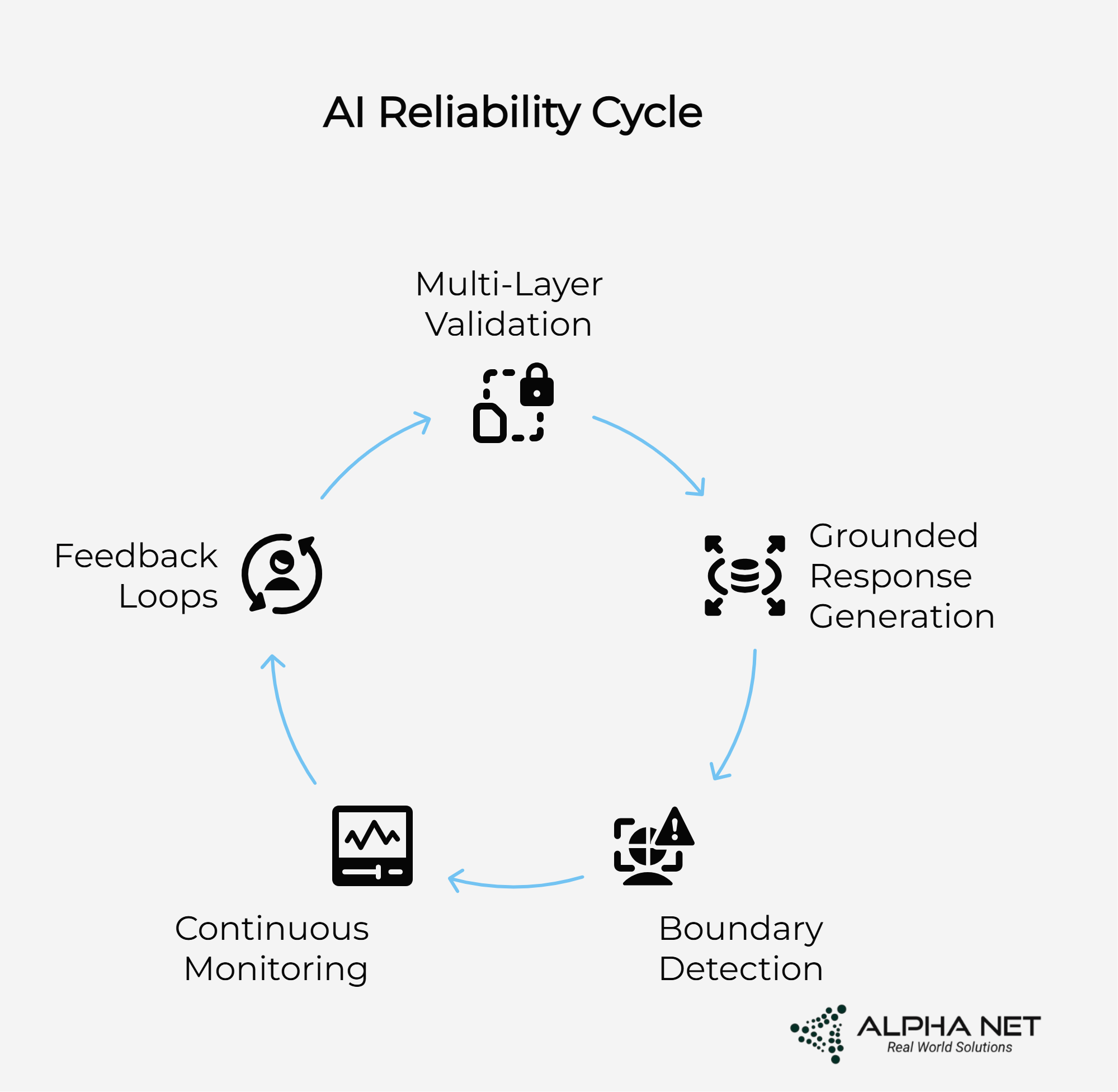
1. Ticket Triage Agent: The Never-Sleeping Service Desk Manager
The Ticket Triage Agent functions like an experienced service desk manager who never sleeps, never takes vacation, and has perfect recall of every similar incident in company history. It analyzes incoming tickets across multiple dimensions—technical complexity, business impact, compliance implications, and resource requirements.
But here’s the crucial difference: it learns from every interaction, continuously refining its classification accuracy. Whether handling IT incidents, customer complaints, HR requests, or facilities issues, this agent ensures nothing falls through the cracks while maintaining consistent service level adherence.
2. Requirements Agent: Bridging the Communication Gap
The Requirements Agent tackles one of the most persistent challenges in support operations: translating vague user complaints into actionable technical specifications. “The system is running slow” becomes a detailed performance analysis with specific metrics, affected components, and recommended investigation paths.
This agent acts like a business analyst who speaks fluent technical language and can bridge the communication gap that causes so many support delays. It understands context, asks clarifying questions, and generates comprehensive requirement documents that technical teams can act upon immediately.
3. Solution Architect Agent: Designing for Sustainable Resolution
The Solution Architect Agent represents perhaps the most sophisticated capability in the suite. This agent doesn’t just suggest quick fixes—it designs comprehensive solutions that account for system interdependencies, scalability requirements, and future maintenance considerations.
It’s the difference between applying a temporary patch and implementing a sustainable solution that prevents similar issues from recurring. This agent thinks systematically about root causes, downstream effects, and long-term operational health.
4. Code Automation Agent: Production-Quality Implementation
The Code Automation Agent writes production-quality scripts, integrations, and configurations that would typically require senior developer involvement. Unlike human developers, it never introduces inconsistencies, always follows established patterns, and generates code that’s inherently self-documenting.
Whether creating API integrations, database queries, automation scripts, or configuration files, this agent maintains coding standards, security best practices, and documentation requirements that ensure maintainable, auditable solutions.
5. Test Case Agent: Comprehensive Validation Scenarios
The Test Case Agent automatically generates comprehensive validation scenarios based on the specific changes being implemented. In regulated environments or critical business systems, testing isn’t optional—it’s mandated by policy and law.
This agent ensures nothing falls through the cracks while dramatically reducing the time investment required for thorough validation. It understands different testing methodologies, creates appropriate test data, and generates documentation that satisfies audit requirements.
6. Validation Agent: Automated Compliance Excellence
The Validation Agent automates the compliance-heavy lifting that typically consumes enormous amounts of human resources. It generates audit trails, executes validation protocols, and produces documentation that satisfies the most stringent regulatory requirements.
Think of it as having a compliance expert who works at machine speed but with human-level attention to regulatory nuance. Whether dealing with financial services regulations, healthcare compliance, or data privacy requirements, this agent ensures all necessary documentation and validation steps are completed accurately.
7. Knowledge Agent: Capturing Institutional Intelligence
The Knowledge Agent captures institutional intelligence in real-time, creating searchable, audit-ready documentation that prevents knowledge loss and accelerates onboarding. Every solution becomes a learning opportunity for the entire organization.
This agent doesn’t just store information—it creates contextualized knowledge that helps teams understand not just what was done, but why it was done, what alternatives were considered, and what lessons were learned for future similar situations.
8. Security Agent: Your Digital Fortress Guardian
The Security Agent serves as the dedicated cybersecurity specialist within our agentic AI framework. Unlike generic security tools that rely on signature-based detection, this agent understands the specific security implications of AI-driven operations and adapts its protection strategies in real-time.
This agent monitors for AI-specific threats: adversarial inputs designed to manipulate agent behavior, data poisoning attempts that could corrupt learning processes, and prompt injection attacks that try to bypass safety constraints. It continuously analyzes agent interactions, identifying patterns that might indicate security compromises while maintaining the operational speed that autonomous systems require.
When suspicious activity is detected, the Security Agent doesn’t just alert—it takes immediate protective action, isolating affected systems, preserving evidence, and coordinating with incident response teams. It maintains detailed security logs that satisfy audit requirements while providing real-time threat intelligence that keeps your AI operations secure.
9. Supervisor Agent: The Orchestration Mastermind
“Trust, but verify” – this principle has never been more relevant than in autonomous AI operations. The Supervisor Agent functions as the intelligent orchestrator that ensures all specialized agents work harmoniously within enterprise constraints.
Unlike traditional workflow engines that follow rigid decision trees, the Supervisor Agent operates with contextual intelligence that understands the nuanced interplay between business priorities, regulatory requirements, and operational constraints. When a critical security incident occurs simultaneously with a compliance audit deadline, this agent dynamically reallocates resources, adjusts priorities, and ensures both challenges receive appropriate attention.
The Supervisor Agent maintains real-time understanding of system health, team capacity, and business context. It monitors agent performance, identifies bottlenecks before they impact operations, and optimizes resource distribution based on actual demand patterns rather than static configurations. Every action taken by specialized agents flows through its quality assurance framework, ensuring consistency and maintaining enterprise-grade standards.
Built-In Guardrails: Preventing AI Hallucinations and Ensuring Reliability
Enterprise AI systems can’t afford to guess or make things up. That’s why our agentic AI framework implements comprehensive guardrails based on proven principles that prevent hallucinations and ensure reliable operations.
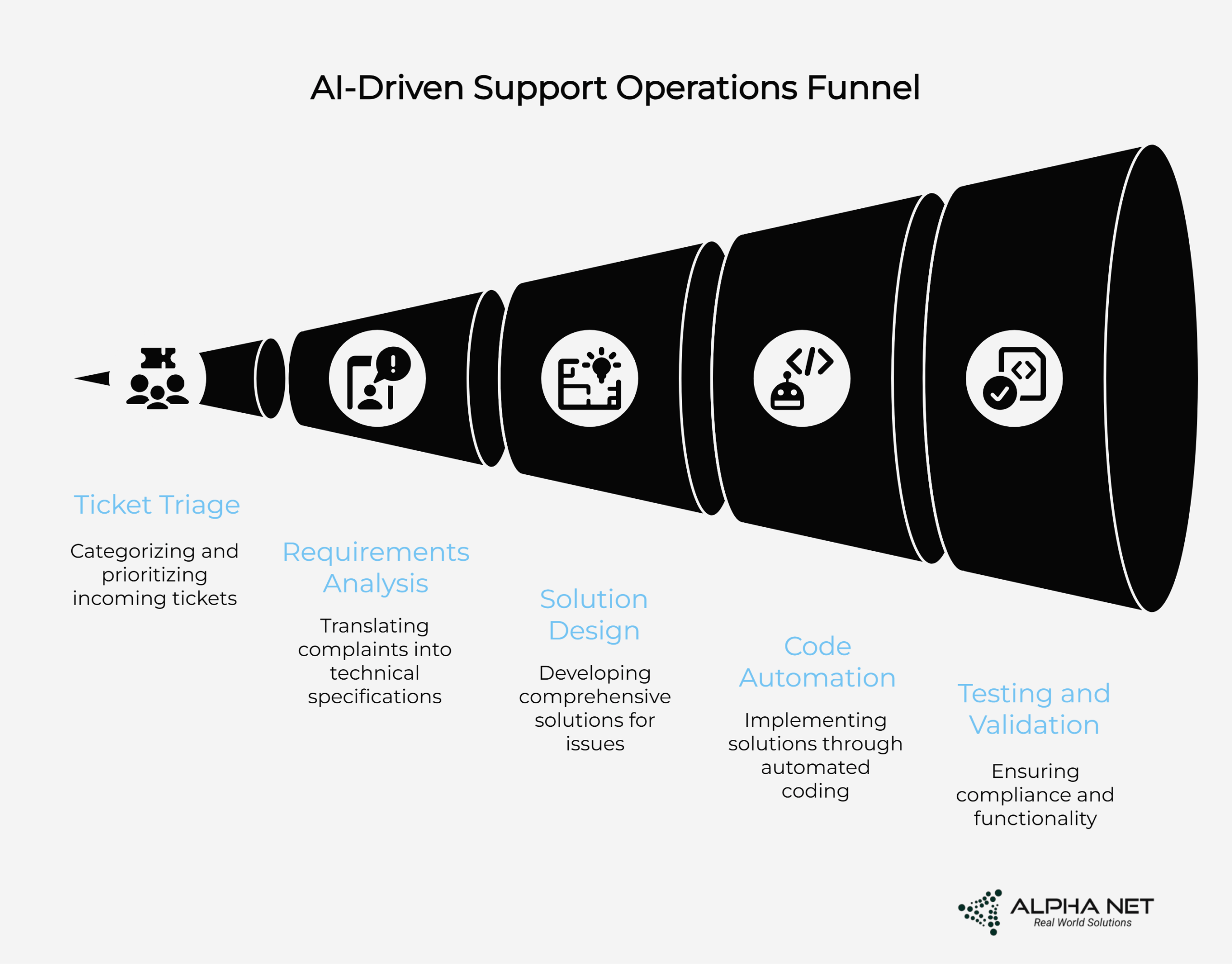
Multi-Layer Validation Framework
Every agent output passes through multiple validation layers before execution. Source verification ensures all information comes from approved knowledge bases or verified data sources. Confidence scoring prevents agents from acting on uncertain information, automatically escalating low-confidence scenarios to human experts.
Cross-agent verification creates a system of checks and balances where multiple agents validate critical decisions independently. When agents disagree, the system automatically triggers human review rather than proceeding with potentially incorrect actions.
Grounded Response Generation
All agent responses are grounded in verifiable data sources. Agents cannot generate information that isn’t explicitly present in their training data or real-time knowledge base. Citation tracking ensures every recommendation can be traced back to its source, creating complete audit trails for compliance purposes.
Boundary Detection and Escalation
Agents are programmed with clear operational boundaries and automatically escalate when encountering scenarios outside their defined parameters. This prevents the overconfidence that leads to hallucinations in AI systems, ensuring human expertise is engaged whenever uncertainty exists.
Continuous Monitoring and Feedback Loops
Real-time monitoring systems track agent performance, identifying patterns that might indicate drift or degradation in output quality. Feedback loops from human operators continuously refine agent behavior, ensuring consistent improvement in reliability and accuracy.
Measurable Impact: The Numbers That Matter to Leadership
The transformation isn’t just theoretical—early adopters across industries are seeing remarkable results that directly impact operational efficiency and bottom-line performance.
We’re witnessing 60-80% reductions in manual processing time for routine support tasks. That’s not a marginal improvement—it’s a fundamental restructuring of how work gets done. Teams that previously spent entire days on ticket triage and initial investigation can now focus on strategic initiatives and complex problem-solving that genuinely requires human creativity and judgment.
Solution accuracy has improved by 300% in many implementations. This isn’t just about getting things right the first time (though that’s certainly valuable). It’s about reducing the cascading effects of errors—the rework, the emergency fixes, the after-hours escalations that destroy team morale and customer confidence.
Triaging speed has increased by 500% while maintaining higher accuracy standards. Tickets that previously sat in queues for hours or days now receive immediate, intelligent classification and routing. The psychological impact on both support teams and end users cannot be overstated.
Documentation time has decreased by 90% while improving quality and completeness. Agents generate comprehensive, audit-ready documentation as a natural byproduct of their work, eliminating the traditional trade-off between speed and compliance.
Perhaps most importantly, these improvements compound over time. Unlike human teams that plateau in performance, AI agents continuously learn and optimize, creating a trajectory of ongoing improvement rather than static efficiency gains.
Purpose-Built for Enterprise Requirements: Not Your Typical Business AI
Generic enterprise AI solutions treat all industries the same—a fundamental mistake when dealing with the unique requirements of different business contexts. Purpose-built agentic AI for support understands diverse regulatory landscapes, integrates seamlessly with industry-standard platforms, and operates within the strict constraints that govern various sectors.
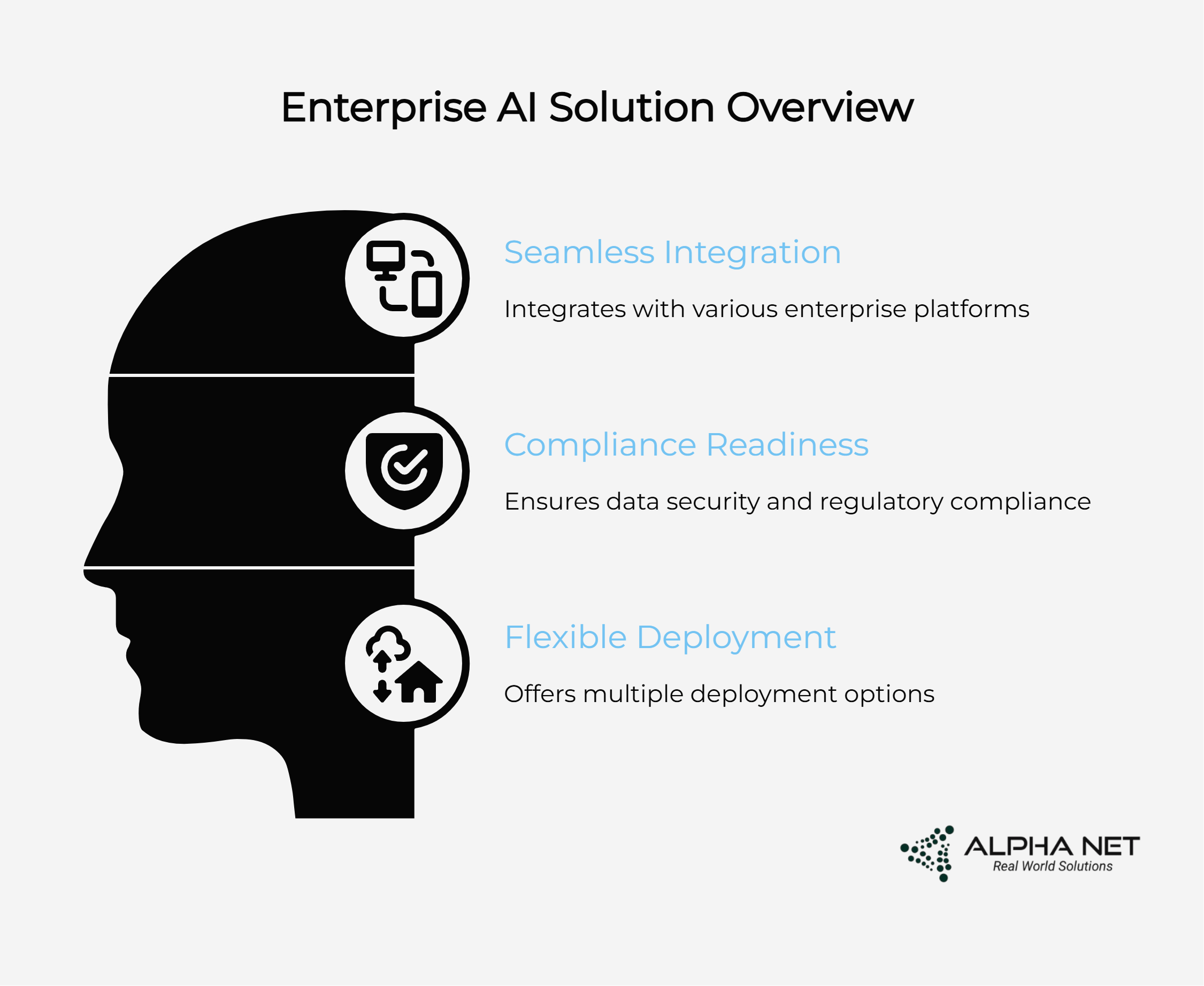
Seamless Integration Across Enterprise Technology Stacks
Integration capabilities span entire enterprise technology ecosystems. Whether you’re running ServiceNow for IT service management, Zendesk for customer support, Jira for issue tracking, Salesforce for customer relationship management, SAP for enterprise resource planning, or Oracle for database management, these agents understand the data models, workflows, and integration patterns specific to each platform.
The agents don’t just connect to these systems—they understand the business logic, approval workflows, and data relationships that make each platform unique in your organization’s context.
Compliance-Ready by Design
Compliance readiness isn’t an afterthought—it’s built into the foundation. The architecture supports full data residency control, ensuring sensitive information never leaves approved geographic boundaries or processing environments. Large language models operate in zero-retention mode, meaning customer data isn’t used for model training or stored beyond immediate processing requirements.
This addresses one of the primary concerns that has prevented many organizations from embracing AI solutions: the fear that sensitive business or customer data might be exposed, retained, or misused by AI systems.
Flexible Deployment Options
Deployment flexibility accommodates diverse infrastructure preferences across industries. Some organizations prefer SaaS models for rapid deployment and reduced operational overhead. Others require private cloud implementations for enhanced control and customization capabilities. Still others mandate on-premises deployment for maximum security and compliance assurance.
The platform adapts to your requirements rather than forcing you to conform to a one-size-fits-all approach. This flexibility is crucial for organizations with specific regulatory, security, or operational constraints.
Under the Hood: Technical Architecture That Inspires Confidence
The technical foundation reflects a deep understanding of both AI capabilities and enterprise requirements. The React and Node.js architecture provides the responsive, real-time execution environment that modern support operations demand while maintaining the stability and reliability that enterprise organizations require.
PostgreSQL serves as the backbone for data management, with encryption at rest and in transit, comprehensive audit logging, and ORM-based protections against common security vulnerabilities. Every interaction is logged, every decision is traceable, and every data access is monitored—essential capabilities for organizations subject to regulatory scrutiny.
TLS 1.3 encryption and AES-256 security standards ensure data protection meets or exceeds industry requirements. Role-based access control provides granular permission management, while comprehensive audit logs create the documentation trail that compliance officers and auditors demand.
The multi-agent architecture uses stateless processing pipelines that enhance both scalability and isolation. Agents can operate independently without creating system-wide dependencies, enabling organizations to deploy capabilities incrementally and scale resources based on actual demand patterns.
The Future Landscape: From Reactive Support to Cognitive Service Management
The current generation of agentic AI represents just the beginning of a transformation that will fundamentally reshape how organizations think about support operations across all industries.
Emerging Agent Capabilities
Risk Assessment Agents will proactively identify potential issues before they impact operations. These agents analyze system metrics, user behavior patterns, historical incident data, and external threat intelligence to predict problems with remarkable accuracy. Instead of responding to failures, teams can prevent them entirely.
Change Impact Prediction Agents will revolutionize how organizations approach system modifications. By analyzing the complex web of interdependencies that characterize modern enterprise environments, these agents can predict downstream effects of proposed changes with unprecedented precision. This capability alone could eliminate many of the unplanned outages and service disruptions that plague modern organizations.
Auto-Remediation Coordinators represent the holy grail of autonomous operations—systems that can not only detect problems but resolve them automatically within predefined parameters. For routine issues that follow predictable patterns, these agents will handle resolution without human intervention while maintaining complete audit trails and escalation protocols for edge cases.
Advanced Learning Capabilities
Cross-ticket learning capabilities will enable agents to identify patterns and relationships that span multiple incidents over extended time periods. This systemic intelligence will surface root causes that might remain hidden in traditional ticket-by-ticket analysis approaches.
Proactive resolution capabilities will shift the entire paradigm from reactive support to predictive maintenance. Systems will self-heal, performance will self-optimize, and potential issues will be addressed before users even notice them.
Strategic Value: What This Means for Leadership
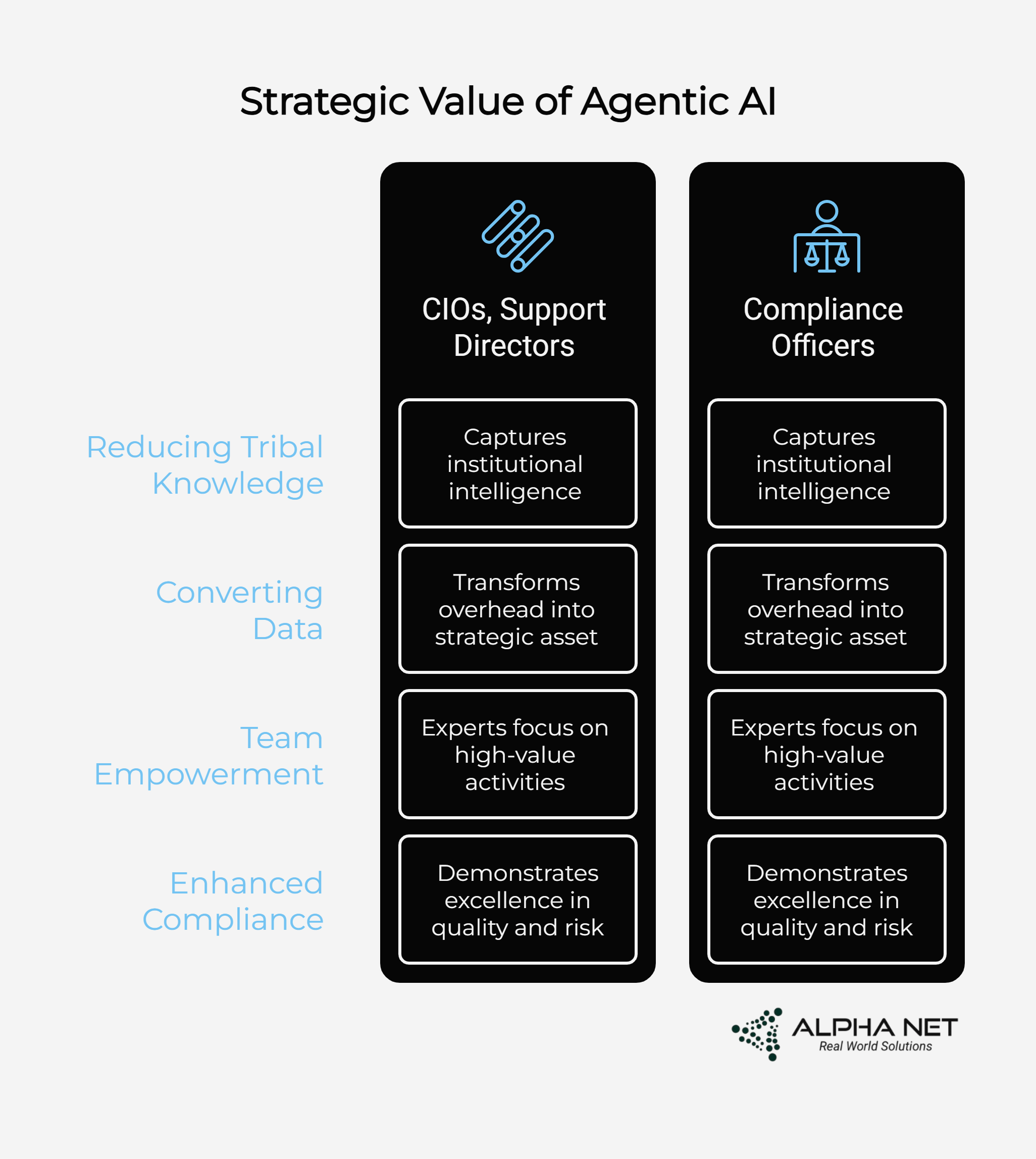
For CIOs, support directors, and compliance officers, agentic AI represents more than operational efficiency—it’s a strategic capability that addresses some of the most persistent challenges in enterprise support management.
Reducing Tribal Knowledge Dependencies
The reduction in tribal knowledge dependency cannot be overstated. Organizations with decades of accumulated expertise locked in the minds of a few key individuals face enormous risk when those experts retire or change companies. Agentic AI captures and codifies this institutional intelligence, making it accessible to the entire organization while ensuring continuity regardless of personnel changes.
Converting Data into Intelligence
Converting support data into institutional intelligence transforms what was once regarded as operational overhead into strategic assets. Every resolved incident becomes a learning opportunity. Every solution becomes part of the organization’s collective expertise. Patterns emerge that inform strategic decisions about infrastructure investments, process improvements, and resource allocation.
Team Empowerment and Cultural Benefits
Team empowerment represents perhaps the most significant cultural benefit. When routine tasks are handled autonomously, human experts can focus on high-value activities that genuinely require creativity, strategic thinking, and complex problem-solving. This shift improves job satisfaction, reduces burnout, and helps organizations attract and retain top talent in an increasingly competitive market.
Enhanced Compliance Capabilities
Enhanced compliance capabilities provide peace of mind for organizations operating under intense regulatory scrutiny. Every action is documented, every decision is traceable, and every process is auditable. When regulators or auditors come calling, organizations can demonstrate not just compliance but excellence in their approach to quality and risk management.
Why Alpha Net Consulting: Your Strategic Partner in AI Transformation
The journey to AI-native support isn’t just about technology—it’s about organizational transformation. Success requires partners who understand both the technical possibilities and the practical realities of implementing advanced AI in enterprise environments.
Alpha Net Consulting brings deep expertise in AI-first support design specifically for enterprise organizations across industries. We understand the unique challenges, regulatory requirements, and cultural considerations that influence adoption success. Our team combines technical excellence with industry knowledge, ensuring implementations that deliver value while maintaining compliance.
Our track record with compliance-heavy enterprises provides the credibility and experience that organizations require. We’ve navigated complex approval processes, addressed security concerns, and solved integration challenges that characterize successful AI implementations in regulated industries.
End-to-end implementation support ensures organizations don’t just acquire technology—they achieve transformation. From initial strategy development through deployment, optimization, and ongoing support, we partner with clients to ensure maximum value realization from their AI investments.
The Choice: Evolution or Revolution
Organizations across industries stand at an inflection point. The traditional approaches to support that served enterprises for decades are increasingly inadequate for the challenges ahead. Regulatory complexity continues to increase. Technical environments grow more sophisticated. Customer expectations rise while tolerance for service disruptions disappears.
Organizations can choose evolutionary improvements—incremental efficiency gains through better processes and additional staffing. Or they can choose revolutionary transformation through agentic AI that fundamentally reimagines what’s possible in support operations.
The early movers are already seeing the benefits. They’re resolving tickets faster, maintaining higher service quality standards, and freeing their teams to focus on strategic initiatives. They’re building sustainable competitive advantages while their competitors struggle with the same operational challenges.
The future of support isn’t just autonomous, intelligent, and scalable—it’s available today. The question isn’t whether agentic AI will transform enterprise support operations. The question is whether your organization will lead the transformation or follow it.
Ready to explore how agentic AI can power your next-generation support model? Connect with Alpha Net Consulting today, and let’s reimagine what’s possible when intelligence meets automation in enterprise support operations.
Call-to-Action
Transform Your Support Operations with Agentic AI
Don’t let manual processes hold your organization back. Discover how Alpha Net Consulting’s agentic AI solutions can revolutionize your enterprise support operations across all business functions.
- Schedule a consultation to explore your specific support challenges
- Request a demo of our specialized AI agents in action
- Download our whitepaper on implementing AI in enterprise environments
Contact Alpha Net Consulting today and take the first step toward autonomous, intelligent, and scalable support operations.