AI-Powered Software Forward Engineering Services: Revolutionizing Development Excellence
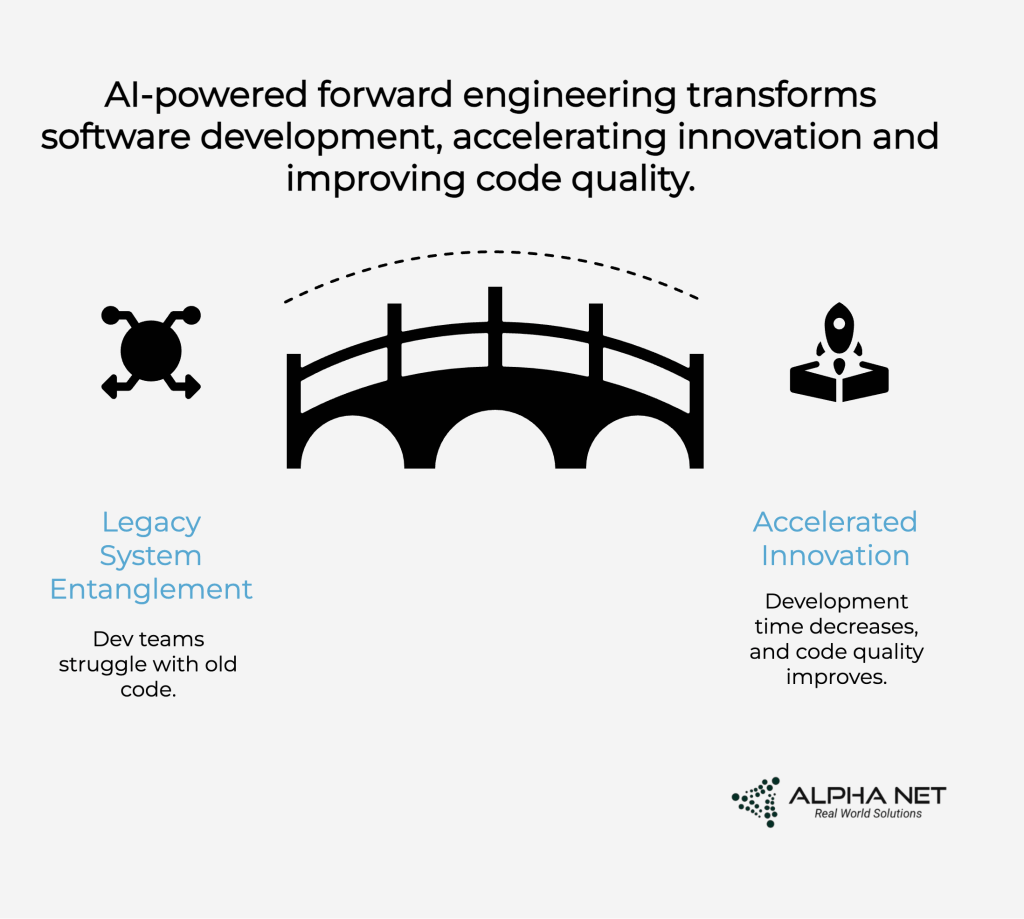
“In software, the hardest part isn’t writing new code—it’s reading old code.” Most dev teams know this too well. 68% are still tangled in legacy systems, burning time just to keep things running. But now, AI-powered forward engineering is flipping that reality. It helps teams cut dev cycles by more than half—without drowning in technical debt.
Picture Sarah, a lead architect at a fintech startup, staring at her monitor at 2 AM. Her team had spent eight months building their trading platform the traditional way—reverse-engineering competitor features, patching existing systems, and fighting technical debt at every turn. Meanwhile, their AI-first competitor just launched a superior product in half the time using forward engineering principles.
Sound familiar? This scenario plays out daily across Silicon Valley and beyond.
But here’s where the story takes an interesting twist. Within six weeks of adopting AI-powered forward engineering services, Sarah’s team completely transformed their approach. Instead of reactive bug-fixing, they shifted to predictive architecture. Instead of feature copying, they embraced innovative solution design. The result? A 40% reduction in development time and code quality that actually improved under pressure.
Welcome to the revolution in software forward engineering, where artificial intelligence doesn’t just accelerate development—it fundamentally reimagines how teams create software that matters. Leading engineering consulting firms like Alpha Net (anetcorp.com) are pioneering this transformation, delivering breakthrough results for clients who dare to think beyond traditional development methodologies.
Understanding Software Forward Engineering: Beyond Traditional Development
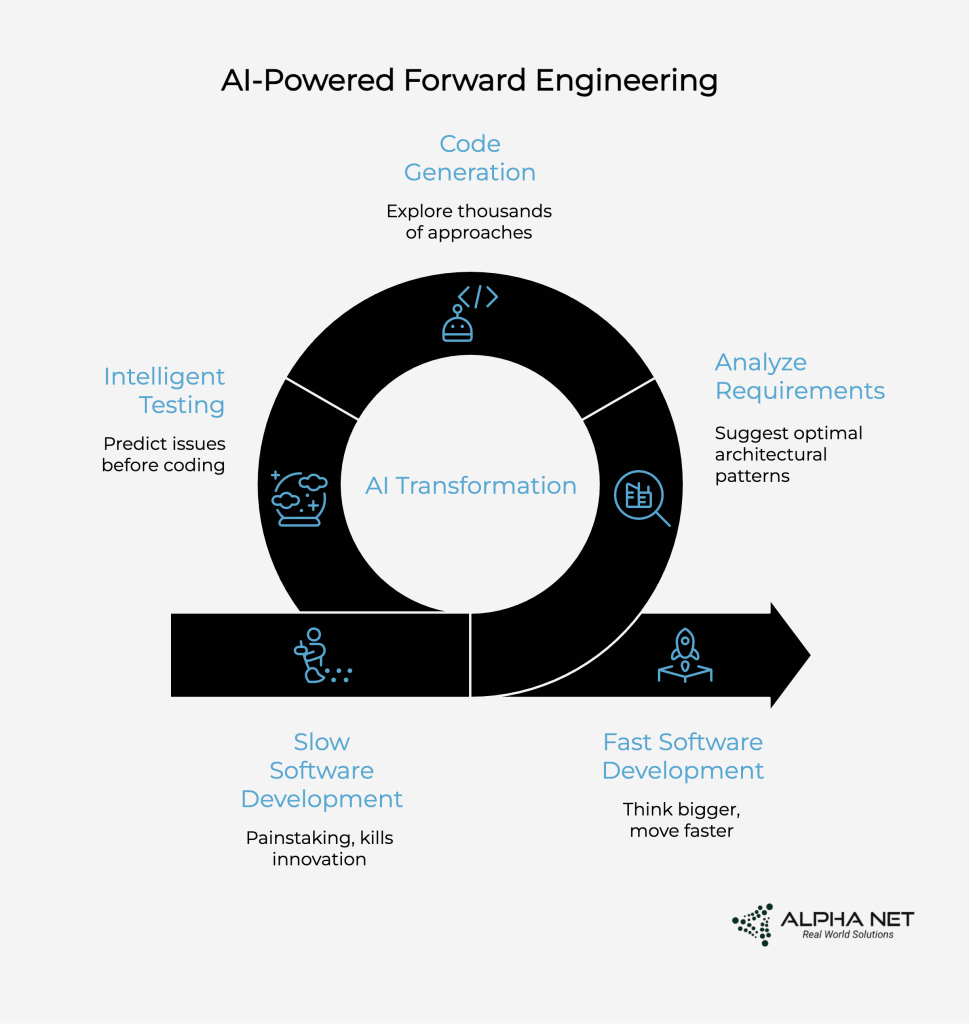
Traditional software development often resembles archaeology—teams spend months digging through existing codebases, trying to understand what previous developers intended, then carefully modifying systems without breaking everything. It’s painstaking work that kills innovation momentum.
Forward engineering represents the opposite philosophy. Instead of starting with existing solutions and working backward, teams begin with clear requirements and architect solutions from the ground up. It’s the difference between renovating a crumbling house and designing your dream home from scratch.
But here’s the challenge most teams face: traditional forward engineering still relies heavily on human intuition and experience. Architects make decisions based on limited information. Developers implement solutions that seem reasonable but may not be optimal. Testing happens after coding, when changes become expensive.
This is where AI transforms everything. Machine learning algorithms can analyze requirements and suggest optimal architectural patterns instantly. Code generation tools can explore thousands of implementation approaches simultaneously. Intelligent testing systems can predict potential issues before a single line of code is written.
The shift isn’t just about tools—it’s about mindset. AI-powered forward engineering enables teams to think bigger, move faster, and create solutions that would be impossible through manual processes alone.
Core AI-Powered Forward Engineering Capabilities That Transform Software Development
Let’s dive into the specific capabilities that make AI-powered forward engineering so revolutionary for software teams.
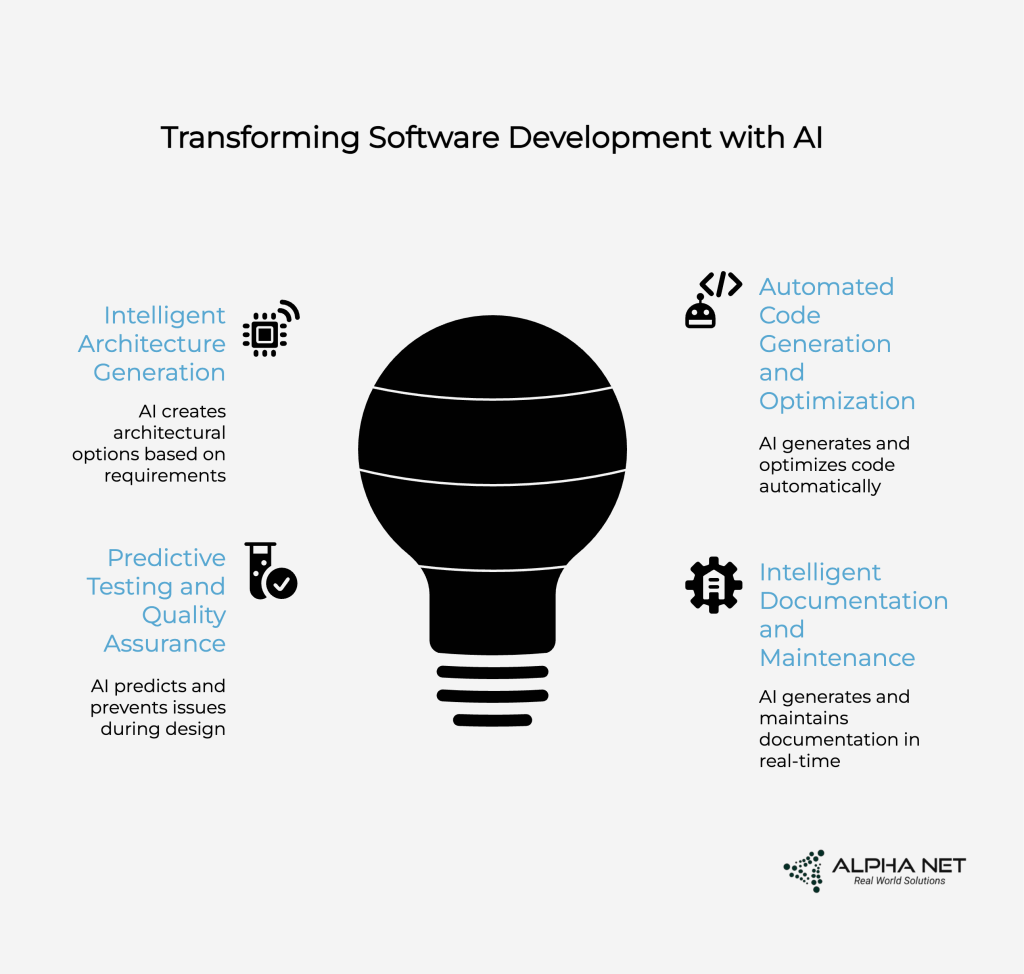
Intelligent Architecture Generation
Architecture decisions traditionally required senior developers to spend weeks analyzing requirements, researching patterns, and designing system blueprints. AI now generates multiple architectural options based on specific requirements: scalability needs, performance targets, security constraints, and integration requirements.
Consider GitHub’s Copilot, which demonstrates this capability at the code level, while enterprise-grade AI systems could operate at the architectural level. They could understand microservices patterns, suggest optimal database designs, and recommend integration approaches based on proven success patterns across thousands of projects.
Teams using AI-powered architecture generation could see 60% faster initial design phases and significantly better long-term maintainability. The AI doesn’t replace architectural thinking—it amplifies human creativity by handling routine design decisions and suggesting innovative approaches that human architects might not consider.
Automated Code Generation and Optimization
Modern AI-based code generation goes far beyond simple templates. AI systems understand business logic, generate complex algorithms, and optimize performance automatically. They analyze requirements written in natural language and produce production-ready code that follows best practices.
The breakthrough isn’t just speed—it’s quality. AI-generated code often exhibits better structure, more comprehensive error handling, and superior performance characteristics than manually written code. This happens because AI learns from millions of code examples, identifying patterns that produce reliable, maintainable solutions.
Companies implementing AI code generation could achieve 70% faster feature development while maintaining or improving code quality. Developers focus on business logic and creative problem-solving while AI handles boilerplate code, optimization, and routine implementation tasks.
Predictive Testing and Quality Assurance
Traditional testing happens after development, when fixing issues becomes expensive and time-consuming. AI-powered forward engineering incorporates testing intelligence from the beginning, predicting potential issues during the design phase.
Machine learning models analyze code patterns to identify potential bugs, security vulnerabilities, and performance bottlenecks before they manifest in production. This predictive approach transforms quality assurance from reactive troubleshooting to proactive optimization.
Advanced AI testing systems generate comprehensive test suites automatically, including edge cases that human testers might miss. They simulate user behavior patterns, stress-test system boundaries, and validate performance under various conditions—all before deployment.
Intelligent Documentation and Maintenance
Documentation traditionally falls behind development, creating maintenance nightmares down the road. AI systems generate and maintain comprehensive documentation automatically, keeping it synchronized with code changes in real-time.
But AI goes beyond simple documentation—it creates intelligent knowledge bases that understand system relationships, component dependencies, and business logic flows. This intelligence enables faster onboarding, more efficient debugging, and better long-term maintenance.
Teams could see 50% reduction in maintenance overhead and significantly faster new developer onboarding when AI handles documentation and knowledge management tasks.
Industry Transformation Scenarios: Potential Results Across Software Sectors
The potential impact shows promise—AI-powered forward engineering could deliver measurable results across diverse software sectors.
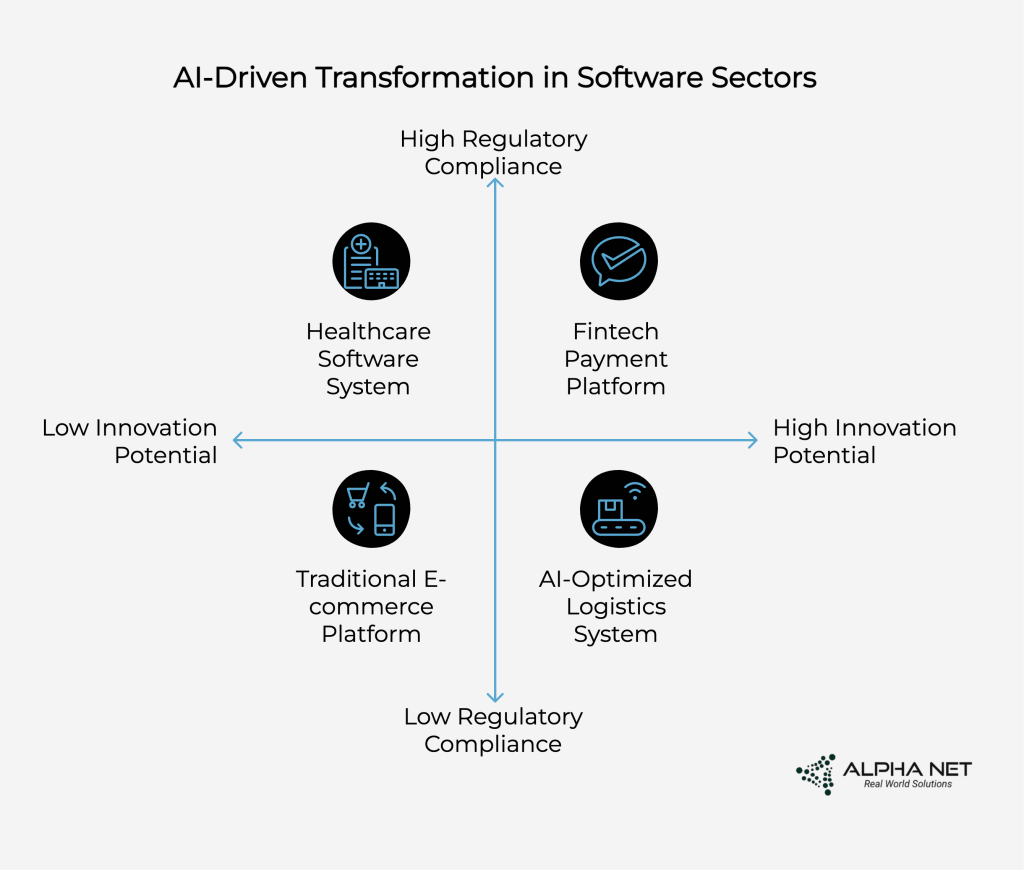
Financial Technology Transformation Potential
Fintech companies face unique challenges: strict regulatory requirements, real-time performance demands, and security standards that brook no compromise. Traditional development approaches struggle with these constraints while maintaining innovation speed.
Imagine a payment processing platform designed through AI-driven forward engineering. Machine learning algorithms could optimize transaction flows from the ground up, predict fraud patterns during the architecture phase, and generate secure code that meets regulatory requirements automatically from initial requirements.
The potential results are compelling: near-perfect uptime through predictive architecture, sub-second transaction processing via AI-optimized code paths, and fraud detection capabilities that could outperform traditional rule-based systems by orders of magnitude. An AI-first approach could enable processing billions of transactions while maintaining security standards that exceed industry requirements.
E-commerce Platform Possibilities
E-commerce platforms must handle massive scale fluctuations, maintain performance under load, and provide seamless user experiences across devices. AI-powered forward engineering could transform how these complex systems are built.
Consider how recommendation engines, inventory management systems, and logistics optimization could emerge from AI-driven forward engineering processes. Machine learning algorithms could analyze customer behavior patterns during the design phase, predict demand fluctuations, and optimize supply chain operations—all built into the system architecture from day one.
The business impact potential is staggering: recommendation systems that could drive significant revenue increases, logistics optimization that reduces delivery times while minimizing costs, and platforms that could handle peak traffic loads that would overwhelm traditionally engineered systems.
Healthcare Software Innovation Scenarios
Healthcare software requires exceptional reliability, regulatory compliance, and integration with complex existing systems. AI-powered forward engineering could revolutionize how electronic health record systems and clinical applications are built.
Imagine AI systems that generate code with automatic HIPAA compliance built in from the architectural level, optimize database queries for massive patient record searches during the design phase, and create intuitive user interfaces that could reduce medical errors through predictive UX design. The forward engineering approach could enable rapid innovation while maintaining the reliability that healthcare demands.
Clinical decision support systems could particularly benefit from AI-driven development, where machine learning algorithms analyze vast medical literature databases during the development process to suggest optimal treatment protocols—all generated through forward engineering principles that ensure accuracy and reliability from the ground up.
Overcoming Implementation Challenges: Strategic Solutions
Despite AI’s transformative potential, software teams face real challenges when adopting forward engineering approaches. Smart organizations address these systematically.
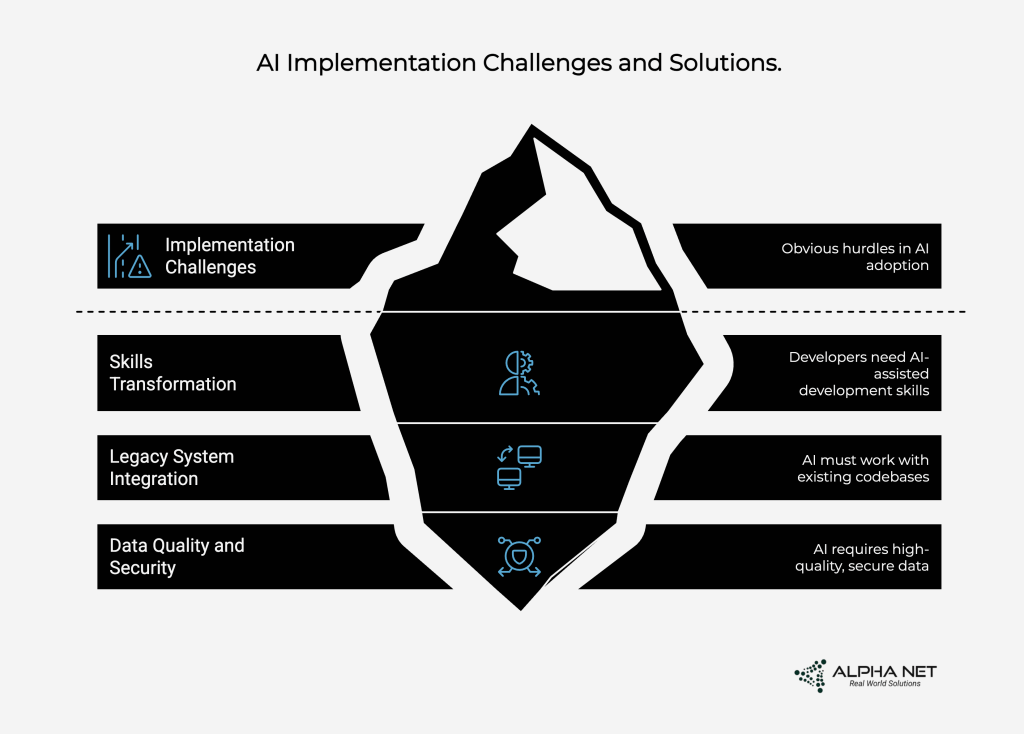
The Skills Transformation Challenge
Traditional developers must learn AI-assisted development practices while maintaining productivity. This isn’t just about new tools—it’s about reimagining the entire development process from requirements gathering through deployment.
The solution involves gradual skill development rather than wholesale replacement. Experienced developers bring domain knowledge and architectural thinking that AI enhances rather than replaces. The most successful teams create AI-human partnerships where each contributes their strengths.
Leading companies provide comprehensive training programs that build AI literacy while respecting existing expertise. This approach accelerates adoption while minimizing resistance to change.
Integration with Legacy Systems
Most organizations can’t abandon existing systems overnight. AI-powered forward engineering must work alongside legacy codebases, creating bridges between old and new approaches.
Smart implementation strategies start with new features and gradually migrate existing functionality. AI systems can analyze legacy code to understand business logic, then generate modern implementations that maintain backward compatibility while providing enhanced capabilities.
This gradual approach minimizes risk while demonstrating AI’s value through concrete improvements in development speed and code quality.
Data Quality and Security Considerations
AI systems require high-quality data to generate optimal code and architectural recommendations. Organizations must ensure their development data, requirement specifications, and performance metrics meet AI training standards.
Security concerns are particularly important when AI systems access sensitive business logic and proprietary algorithms. The solution involves implementing AI systems with built-in privacy protections and access controls that maintain security while enabling AI capabilities.
Alpha Net: Pioneering AI-Powered Software Forward Engineering
Since 2001, Alpha Net has evolved from traditional software consulting into a leading AI-first engineering services provider. Their transformation demonstrates how established organizations can successfully navigate the transition to AI-powered forward engineering.
Comprehensive AI-Integrated Development Methodology
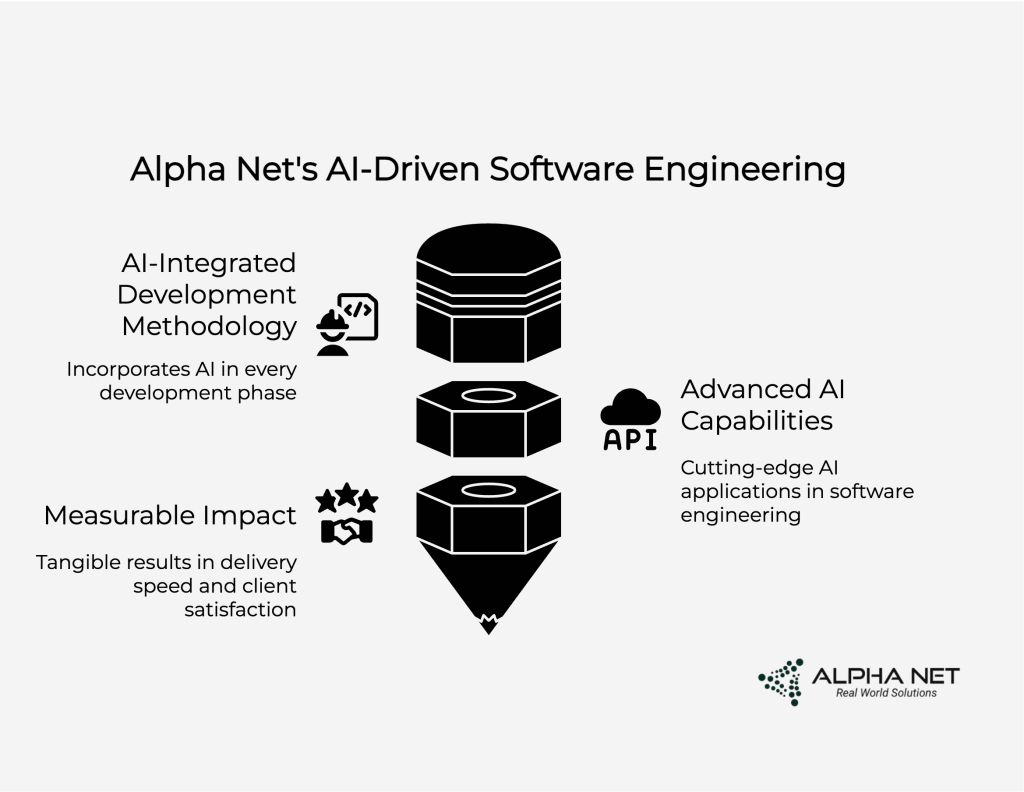
Alpha Net’s software engineering methodology incorporates AI at every development phase. Requirements analysis benefits from natural language processing that identifies potential ambiguities and suggests clarifications. Architecture design leverages AI pattern recognition to recommend optimal system structures.
Development phases use AI code generation to accelerate implementation while maintaining quality standards. Testing incorporates predictive analytics to identify potential issues before they impact users. Deployment benefits from AI-powered monitoring that optimizes performance and predicts maintenance needs.
This end-to-end integration differentiates Alpha Net from competitors who treat AI as an isolated tool rather than a comprehensive capability that transforms the entire development lifecycle.
Advanced AI Capabilities for Software Excellence
Alpha Net’s AI-powered capabilities represent cutting-edge applications in software forward engineering. Their generative AI systems create not just code but entire application architectures based on business requirements and performance constraints.
Digital twin technology creates virtual representations of software systems that enable comprehensive testing without deploying to production environments. These virtual systems accurately model performance characteristics, user interaction patterns, and integration behaviors.
Agentic AI systems handle routine development tasks autonomously—code reviews, documentation updates, performance optimizations, and security scans. This automation frees human developers to focus on creative problem-solving and strategic architecture decisions.
Measurable Impact Across Software Projects
Alpha Net’s performance metrics demonstrate tangible results: 10× faster delivery speeds, ROI achievement within 90 days, and client satisfaction rates that exceed industry standards. These aren’t just efficiency improvements—they represent fundamental transformations in how software gets built.
Their automotive clients achieve 60% faster application development cycles. Financial services projects reduce compliance verification time by 40%. E-commerce platforms improve performance optimization by 50%—proving the value of expert AI engineering services in software development.
Strategic Implementation: Your Roadmap to AI-Powered Forward Engineering
Successful AI forward engineering adoption requires a strategic approach that balances ambition with practical realities.
Start with High-Impact, Low-Risk Projects
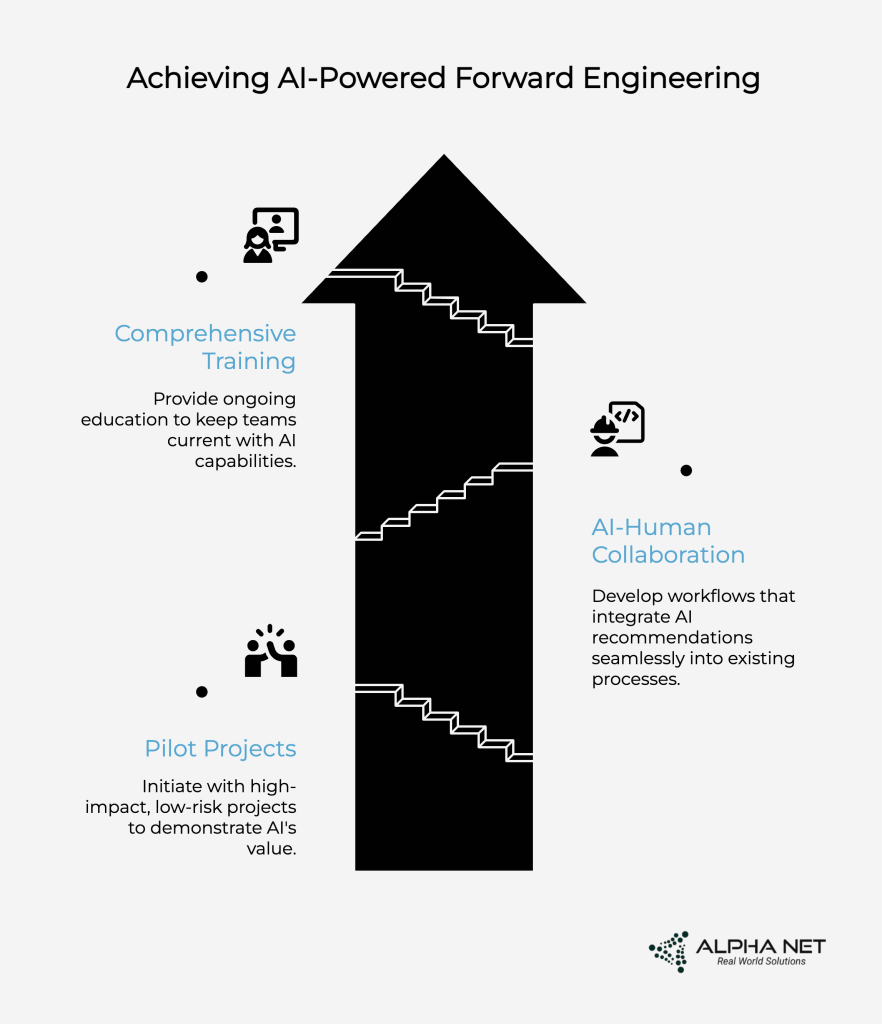
Smart organizations begin with pilot projects that demonstrate AI’s value quickly while building internal confidence. Focus on new features or applications where AI can show clear improvements without risking existing systems.
Choose projects with measurable success criteria—development time reduction, code quality improvement, or performance optimization. Success in pilot projects creates momentum for broader AI adoption across development teams.
Build AI-Human Collaboration Models
The most successful implementations create genuine partnerships between developers and AI systems. Humans provide creative vision, business understanding, and quality judgment while AI handles optimization, pattern recognition, and routine implementation tasks.
This collaboration requires new development workflows that integrate AI recommendations seamlessly into existing processes. Teams must learn when to trust AI suggestions and when human oversight becomes critical.
Invest in Comprehensive Team Development
Technical training must address both AI tool usage and the changed development methodologies that AI enables. Cultural training should promote AI adoption while addressing concerns about job displacement or skill obsolescence.
Leading organizations provide ongoing education that keeps teams current with rapidly evolving AI capabilities while building confidence in AI-human collaboration approaches.
The Future of Software Forward Engineering
Looking ahead, autonomous development systems will handle increasingly complex tasks while human developers focus on strategic vision and creative problem-solving. Quantum computing integration will enable AI systems to optimize software performance in ways that seem impossible today.
AI-human collaboration models will mature beyond simple automation to true creative partnerships. The future belongs to development teams that master this collaborative approach through expert AI engineering services.
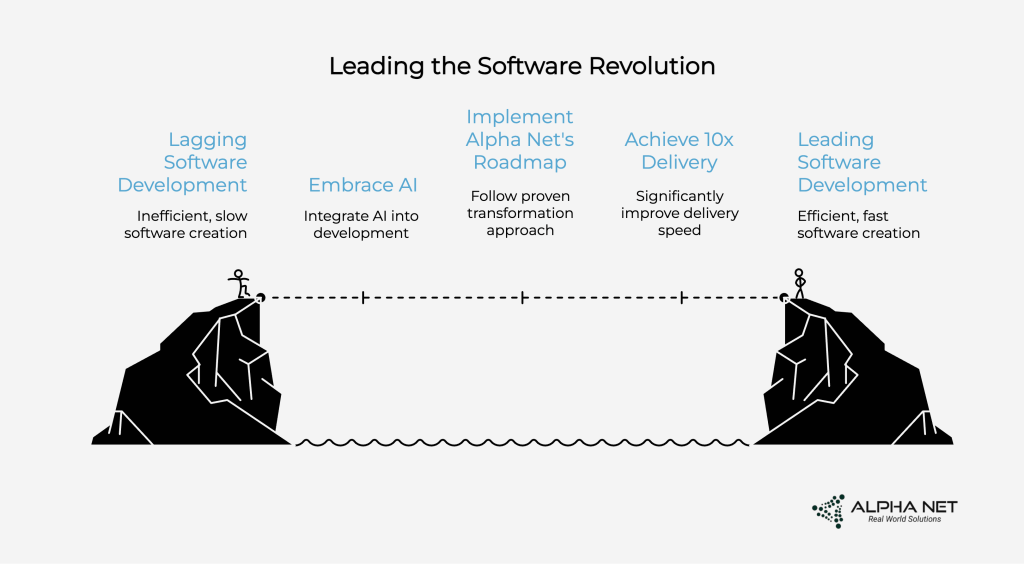
Conclusion: Leading the Software Revolution
The transformation of software development through AI-powered forward engineering represents more than a technological upgrade—it’s a fundamental shift in how organizations create digital solutions. Companies embracing this change gain compounding competitive advantages while those resisting risk falling behind permanently.
Alpha Net’s success demonstrates that this transformation is not only possible but profitable. Their approach—achieving 10× delivery improvements and ROI within 90 days—provides a proven roadmap for organizations ready to embrace the future of software development.
The question isn’t whether AI will revolutionize software forward engineering—it’s whether your organization will lead or follow this evolution. The best time to start was yesterday. The second best time is right now.